El martes 10 de noviembre un grupo de 18 científicos, humanistas y artistas de diferentes partes del mundo, se reunieron
The New Explorers examines encounters with the American landscape by twelve contemporary female artist-adventurers. An illustrated narrative with an introduction
Press Release Ensayos: Trials on an Archipelago October 21st - November 14th FUG 431 E 6TH BSMT NYC 10009 Office
Dear Enemy by Christy Gast + Ensayos September 28 – October 10, 2015 Research in Tierra Del Fuego, Chile Residency
  In 1946, a group of Canadian beavers got a free one-way ticket to Argentina. Specifically, they were headed for
Global Positioning Systems is the second iteration of Pérez Art Museum Miami’s Overview Galleries, in which selections from PAMM’s permanent collection are displayed
Beaver Rachel Poliquin With their unique scaly tail, chainsaw teeth, powerful scent and astonishing architectural prowess, beavers are unlike any other
EXHIBITION OVERVIEW Curated by Victoria Reis, Transformer The first in the Do You Know Where Your Art Comes From? four-part exhibition series
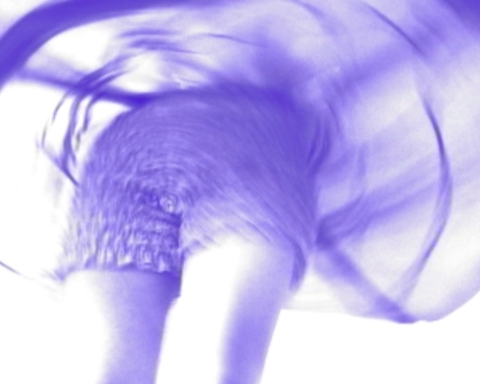
“In and Between Geographies” brings together a group of international artists who incorporate into their practice research and thinking on issues
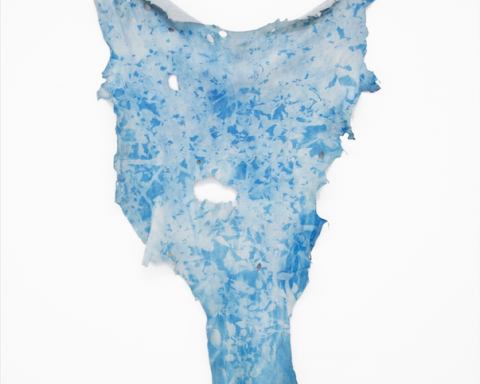
“I grew up in the country, in a tiny village surrounded by farmland,” artist Christy Gast says from her loft
Beyond the End is an exhibition dedicated to a research and residency program initiated in 2010 in Tierra del Fuego by
  CHRISTY GAST “MORNING TIDE (MIAMI)” 2014 CYANOTYPE ON CANVAS CHRISTY GAST “MORNING TIDE (MIAMI)” 2014 CYANOTYPE ON CANVAS CHRISTY


El martes 10 de noviembre un grupo de 18 científicos, humanistas y artistas de diferentes partes del mundo, se reunieron en Pioneer Works, un centro de arte e innovación ubicado en Brooklyn, para hablar sobre conservación en Tierra del Fuego. El centro, de más de dos mil metros cuadrados, es uno de los más importantes en la escena cultural de la ciudad, y para la ocasión, su mismísimo director y fundador, el taquillero artista Dustin Yellin, dio el tour de bienvenida.

El grupo, diverso en edades y disciplinas, se reunía ahí para hablar sobre Ensayos, un proyecto pionero que ha atraído la mirada de artistas europeos y estadounidenses, científicos de la Wildlife Conservation Society (WCS), una de las organizaciones más antiguas y prestigiosas del mundo dedicada a la preservación, y de intelectuales como el antropólogo y filósofo de la ciencia Bruno Latour.

“Estamos practicando nuevas formas de estar en Tierra del Fuego”, explicó Camila Marambio, curadora chilena de 36 años, ex directora de arte de Matucana 100. 

Hace cinco años, la curadora, nacida en Estados Unidos pero criada en Chile, visitó por primera vez Tierra del Fuego y sintió que este era su lugar en el mundo; un territorio diverso y complejo, binacional y contradictorio, por ser a la vez prístino y continuamente explotado. Y entonces decidió cuidarlo. Contactó a la ecóloga Bárbara Saavedra, directora del Parque Karukinka, un terreno de trescientas mil hectáreas en la Patagonia Chilena que le pertenece a la WCS, y le propuso trabajar en conjunto. 

La idea de Marambio, que tiene una maestría en estudios curatoriales en la Universidad de Columbia en Nueva York y otra en Arte y Política en Sciences Po, París, era integrar la mirada del arte y las ciencias sociales en la conservación del parque. Saavedra aceptó y así surgió el primero de cuatro ensayos. 

“La definición de ensayo es un intento de hacer algo práctico. Es lo que hacemos como científicos”, dijo a Tendencias Julie Kunen, directora ejecutiva del programa de América Latina y el Caribe de WCS, en Pioneer Works. “Pero el proceso de indagar es universal. El valor de este proyecto es que está juntando estos mundos en pos de la conservación. Hay gente que se acerca a estos temas por medio de la ciencia, otros por medio de las emociones, y Camila es un proponente de unificación”. 

El valor de lo inútil 

En estos últimos cinco años, Ensayos se ha enfocado en tres asuntos que impactan a Tierra del Fuego: la restauración del ecosistema mediante el manejo de especies invasivas, la geografía humana tras la brutal colonización de grupos indígenas autóctonos y la conservación de la costa. En todos ellos, su mirada complementa y complejiza la mirada de la ciencia. 

Los castores, por ejemplo, representan una de las mayores amenazas a la biodiversidad de la Patagonia. En 1946, 25 parejas de castores canadienses fueron introducidos cerca de Ushuaia, Tierra del Fuego. Hoy, hay más de 100 mil y, según Bárbara Saavedra, se están comiendo, literalmente, el bosque más importante del mundo en esa latitud. Por eso es necesario erradicarlos. 

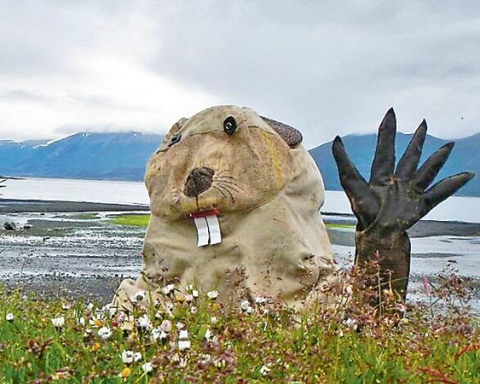
Pero Ensayos propuso que antes de erradicar, era necesario escuchar a los castores para hacerse cargo de su realidad como seres vivos. En una performance, por ejemplo, Marambio, la artista estadounidense Christy Gast y la pareja de científicos Derek Córcoran y Girogia Graells pasaron un tiempo en la castorera del parque vestidos como castores, con vestuarios hechos por Gast, para intentar convertirse en castores y sentir como ellos. En otro ejercicio más reciente, Gast comenzó a trabajar con científicos del Instituto de Arte y Olfato de Los Ángeles, California, para crear un perfume que les permita atraer o repeler a los castores y así continuar la conversación.

“No estamos produciendo soluciones inmediatas a problemas complejos, sino que al revés, estamos aportando con más complejidad, con preguntas que vienen desde otro lado, con una actitud de revisar las soluciones que ya existían”, explicó Marambio.  

Para Saavedra, la conservación de la biodiversidad es un problema complejo, que requiere incluir todas las miradas, yendo más allá de cualquier disciplina. En su opinión, la visión científica no está por sobre las otras. 

“Nosotros confluimos desde nuestra mirada científica-técnica, pero se nos ha abierto el mundo trabajando con artistas”, dice Saavedra. “Al enfrentar una pregunta específica -como la restauración de un ecosistema dañado por el castor o la conservación de las costas- cada persona con su visión pone a disposición de otros su saber, y es capaz de mirar el de los otros, para en conjunto aventurarse a un proceso diferente de aprendizaje: integrado, inclusivo e identitario”.

Al hablar sobre Ensayos, Marambio muchas veces usa la palabra inútil. La palabra ya tiene un lugar en Tierra del Fuego; Bahía Inútil es una de las más imponentes de la Isla Grande, pero al ser poco profunda, no sirve para fondear barcos, por lo que permanece relativamente intacta. Por años, el equipo de Ensayos se ha preguntado qué puede hacer el arte para ayudar a las organizaciones científicas en el proceso de conservación. “Y una y otra vez llegamos a la respuesta de que el arte es bastante inútil en ese contexto”, se ríe. Pero, al igual que con la bahía, su inutilidad puede ser positiva. 

“Abogar por la inutilidad en estos días donde la eficiencia se valora por sobre todo, es realmente abogar por una manera alternativa de vivir”, argumenta Marambio. 

Para el grupo, es más importante escuchar, observar, cuestionarse y compartir, que producir cualquier resultado. La inutilidad del proyecto levanta la ceja de quienes no entienden el sentido, pero para su directora, es un ejercicio de libertad. “Ensayos ejercita la vulnerabilidad, aquella misma que es percibida cada vez que alguien pisa por primera vez la Tierra del Fuego y siente el viento desatado, ve el cielo infinito, escucha el constante oleaje de las aguas del estrecho batirse contra las costas de la Isla Grande”, dice.

Pero en cinco años de proceso, Ensayos ha tenido resultados: performances, publicaciones, charlas, encuentros y muchas jornadas de trabajo de campo con artistas, curadores, antropólogos y biólogos en Tierra del Fuego (una con el mismísimo Latour), París, Estados Unidos y el Círculo Ártico. El año pasado, el equipo presentó una exhibición/simposio de un mes en la prestigiosa Fundación Kadist, en París, y este mes realizaron un seminario de un mes en la escuela BHQFU en Nueva York. Todo, con fondos privados e internacionales, autogestionados.  

“Este proyecto es realmente la visión de Camila, una curadora que ha trabajado en instituciones muy importantes en todo el mundo, que tiene una mente increíblemente aguda y la capacidad de pensar sobre el arte en una manera realmente distinta”, dice la artista Christy Gast. “Ella podría estar viviendo y trabajando en cualquier parte del mundo, pero ha decidido hacer de este proyecto en Tierra del Fuego su obra de vida”. 

Además de la creación de la fragancia, los próximos proyectos de Ensayos incluyen la continua lucha por una legislación adecuada para el borde costero y la realización de una telenovela judicial que dé a conocer grandes casos legales que hayan definido el territorio. La historia de la maderera Trillium y el nacimiento de Karukinka, por ejemplo; o la historia de Caleta María o Puerto Yartou. Cada uno de ellos tendrá un narrador local, entre ellos Bárbara Saavedra, Ivette Martínez y María Luisa Murillo. 

Lo que mueve a todo el grupo es la profunda convicción de que lo que están haciendo tiene el potencial de afectar decisiones importantes para el futuro de Tierra del Fuego, y por qué no, de otros esfuerzos ecológicos en el resto del mundo. Conservar no es sólo cercar, dice Bárbara Saavedra.

“Nuestra contribución no es siempre tangible o visible”, concluye Karolin Tampere, curadora noruega de Ensayos. “Pero Ensayos es lo que está permitiendo a todo este grupo de personas conversar sobre estos temas”.


The New Explorers examines encounters with the American landscape by twelve contemporary female artist-adventurers. An illustrated narrative with an introduction by author and critic Lucy R. Lippard, the book traces the role that artist-adventurers have played in shaping American identity throughout history. The author traveled across the country to talk with these women about their projects as part of her own quest to understand how artists make meaning in landscape. The conversations revealed emerging themes that override familiar notions of beauty and entropy and show how the topography of everydayness is ripe for cultural investigation by a new breed of artist-explorers. The book moves well beyond the boundaries of the art world to make unexpected connections between history, geography, and visual culture in the 21st century landscape.

Press Release

Ensayos: Trials on an Archipelago
October 21st – November 14th
FUG 431 E 6TH BSMT NYC 10009

Office hours: Thursday and Friday, 12-3pm
Closing event: November 14th, 6-9pm
Additional viewings by appointment.

(10/02/15) NY,NY: BHQFU, New York’s Freest Art School, is pleased to present TRIALS ON AN ARCHIPELAGO, a residency, seminar, and exhibition focusing on Ensayos, a nomadic research program based in Tierra del Fuego (TdF) at FUG (Foundation University Gallery). Since 2010, Ensayos has brought together artists, scientists and other thinkers and doers to address issues of land use, ecology and ethics at the end of the world.

Ensayos focuses on three issues impacting TdF: ecosystem restoration through invasive species management, post-colonial geography, and coastal conservation. These are investigated with researchers from the Wildlife

Conservation Society-Chile’s Karukinka Natural Park, a major partner in “thinking through” the global implications of these local problems. So far, the results of this experimental research and creative process have included performances, academic papers, a documentary, an exhibition, and many fieldwork sessions—in Tierra del Fuego, Paris, Los Angeles and the Arctic Circle. Current projects include a fragrance, a telenovela and advocating for legislation.

During October and November, FUG will serve as Ensayos’ New York basecamp—part residency, part exhibition and part seminar. The seminar, led by curator Camila Marambio,who founded and directs Ensayos, looks at research or project-based artistic practices using Ensayos as a working model. Throughout the month, a web-like installation will grow in the space, combining elements of artist Christy Gast’s research on plant-based textile dyes and sociologist Denise Milstein’s social network mapping. The formal elements of this narrative web are determined by chance (colors derived from the forest) and technology (a coded data set), and reflect input from many voices, highlighting the questions of authorship that arise from complex, multidisciplinary collaborations. The FUG residency opens Ensayos’ process to the public, functioning as a space to give form to an evolving set of inquiries.

A new issue of the Ensayos periodical “Más allá del fin/Beyond the End”will accompany the exhibition, with contributions from Bruno Latour, Laura Ogden, Bárbara Saavedra, and Cecilia Vicuña, amongst others. This issue of the periodical delves into the notion of “rehearsal” through a collection of essays that can be interpreted as scores.

Ensayos participants: Christy Gast (artist), Giorgia Graells & Derek Corcoran (biologists), Sossa Jorgensen (artist), Fabienne Lasserre (artist), Carla Macchiavello (art historian), Camila Marambio (curator), Denise Milstein (sociologist), Maria Luisa Murillo (artist), Randi Nygård (artist), Laura Ogden (anthropologist), Alfredo Prieto (archeologist), Bárbara Saavedra (ecologist), Carolina Saquel (artist), Juan Andrés Silva (sociologist), Karolin Tampere (curator), Geir Tore Holm (artist), Sofía Ugarte (sociologist), Cecilia Vicuña (artist), amongst others.

About Ensayos: Ensayos is a nomadic research program that enables experimental interdisciplinary practice as a model to deal with ecological issues in Tierra del Fuego (TdF). The program is motivated by the strong sentiment that TdF, despite its remoteness, is a cultural and geographical center from which to speculate and exercise emergent forms of bio-cultural ethics.

In 2010, Camila Marambio—inspired by the existing conservation efforts of the Wildlife Conservation Society-Chile’s Karukinka Natural Park—proposed a program to integrate artists and humanities scholars into WCS-Chile’s existing scientific research teams on Tierra del Fuego. Since September 2011, Ensayos has focused its investigative efforts on some of the most critical issues for the isles of the region: habitat restoration through the control of invasive species, post-colonial geography, and coastal conservation and sustainable management. Each inquiry is the responsibility of different groups of individual agents who share their concerns by exchanging methodologies with each other in a playful practice of expanding the possible.

Ensayos was developed with cooperation from Karukinka Natural Park, and residencies have been hosted by: Estancia Vicuña and Lago Escondido in Karukinka Natural Park; Casa-Museo Alberto Baeriswyl in Chilean Tierra del Fuego; Museo Martin Gusinde, OMORA and Festival Cielos del Infinito on Isla Navarino, Chile; CADIC/CONICET research station in Ushuaia, Argentina; the Kadist Foundation and Muséum National d’Historie Naturelle in Paris; Dartmouth College in New Hampshire; and the Institute for Art and Olfaction, Los Angeles. The program was the subject of an exhibition at the Kadist Art Foundation, Paris, in 2014.

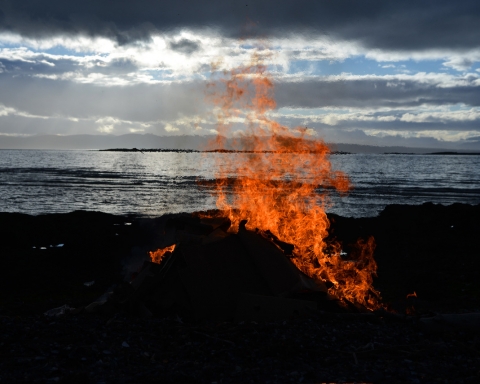
Image credit:

María Luisa Murillo
Señales de fuego I, 2015

Dear Enemy
by Christy Gast + Ensayos
September 28 – October 10, 2015
Research in Tierra Del Fuego, Chile
Residency at The Institute for Art and Olfaction


AN ARTIST, A CURATOR, A BIOLOGIST AND AN ECOLOGIST TEAM UP TO CREATE A PERFUME DESIGNED TO HELP HUMANS COMMUNICATE WITH THE BEAVER POPULATION IN TIERRA DEL FUEGO.


The Institute for Art and Olfaction is pleased to present Dear Enemy, a project by artist Christy Gast and collaborators from ENSAYOS including curator Camila Marambio, ecologist Derek Corcoran and biologist Giorgia Graells.

This project came as a result of a collaborative inquiry about how to communicate with the invasive Canadian beavers to be found on the Tierra del Fuego archipelago, so as to include them in the decision making process about their own endangered future on the islands. The Dear Enemy Effect is a behavioral phenomenon observed in animals who are less aggressive to neighbors with whom they have clearly established boundaries.

This project is being created through ENSAYOS – a research and residency program in Tierra del Fuego, and a grant from the Art Matters Foundation.

Updates and more on website:  http://artandolfaction.com/projects/beavers/


In 1946, a group of Canadian beavers got a free one-way ticket to Argentina. Specifically, they were headed for the archipelago Tierra del Fuego, a swath of islands on the southernmost tip of South America. The Argentine government thought the beavers would be the lynchpin of a new fur industry—but they were wrong.

Now, nearly 70 years later, one artist is trying to communicate with these beaver transplants—and she’s doing it entirely through smell.

Split between Argentina and Chile, Tierra del Fuego boasts cool summers and wet winters, and is marked by forests, mountains, and glaciers. There are foxes, hummingbirds, and king penguins, and a variety of whales and seals swim off its shores. And, thanks to the Argentine government, after 1946 there were beavers—beavers imported directly from Canada.

At the time the beavers arrived, beaver pelts were at a premium, which is why officials hoped to create a home-grown fur industry. (The original number of beavers imported has been reported at various numbers, from 20 to 50.)  The plan to establish a fur trade failed, but the beavers, sans natural enemies, flourished. Scientists have estimated that the modern beaver population has swelled to over 100,000 or more.
 
A beaver dam in Tierra Del Fuego. (Photo: Ilya Haykinson/WikiCommons CC BY-SA 1.0)
And, as beavers are wont to do, the critters are cutting down trees and building dams. That’s no big deal in their Canadian homeland, but it’s a problem when you’re talking about an invasive species whose chomping grounds include the protected lands inside the Karukinka Natural Park. In 2006 Argentina and Chile teamed up to explore solutions to the beaver problem—a moment of cooperation for the countries, who have a historically acrimonious relationship. Since then, they have launched eradication efforts including trapping and rewarding beaver hunters.

Perhaps this doesn’t sound like the setup for a partnership between artists, scientists, and a Los Angeles-based art center focused on smell—but it is. 

Multimedia artist Christy Gast has danced, made videos, sculptures and cyanotypes. Her work is strongly place-based; she has created projects around the Everglades, a roadtrip, and the Herbet Hoover Dike among other locales. She is also part of Ensayos, a Tierra del Fuego-based consortium of artists, scientists, and other interested parties. Founded in 2010 by curator Camila Marambio, the group creates work exploring regional issues, particularly invasive species. The group’s members are spread around the globe, but  travel to Tierra del Fuego for projects. It was through this partnership that Gast got the idea that she should try to talk to beavers.

While traveling in Tierra del Fuego, Gast got to know biologist Giorgia Graells and ecologist Derek Corcoron, who conduct field research on beavers. They wondered: What if you could communicate with beavers? Maybe you could tell them something useful, such as “You have no natural predators in Tierra del Feugo, so you don’t need to chop down trees and build dams for protection.” Smell seemed like a good place to start.

Beavers don’t see or hear well, so they lean more heavily on their sense of smell. But for a beaver, the most important smell organ isn’t the nose. It’s a gland in the nether regions called the castor sac.

“The way the beaver uses it is to mark a mound that it builds,” says Gast. ”It squirts the glandular secretion on it and it also pees on it and creates a muddy, musty smell that tells other beavers that this is one beaver’s territory. And it can regulate the intensity of the smell by eating certain things.” 

Trapper measuring a beaver’s tail. (Photo: Still from ‘Castor Chef’/Christy Gast, 2014)

The castor sac’s secretion is called castoreum, and it’s great at mixing smells, which is why it why perfume makers have harvested it for centuries  to use  when concocting new scents. Natural castoreum is not commonly used today, thanks in part to the invention of a synthetic version is which is much more easily attained.

This is the background of Gast’s work, “Dear Enemy.” For the project,Gast and her collaborators will make fragrances using both natural and synthetic castoreum and other scents. These will be distributed during fieldwork experiments in North and South America next year, and ecologists will study the beavers’ responses.Such work is not without precedent; scientists have used beaver scent to both repel beavers (by placing another beaver’s scent in their territory) and to encourage beavers to expand their own territory (by spreading their own scent beyond their current home).

Gast has never made a scent before, but her work will join a growing body of smell-based artwork around the world. She will begin the project with a two-week residency at the Institute for Art and Olfaction in Los Angeles.

This non-profit is the brainchild of Saskia Wilson-Brown, a refugee of the television industry. Wilson-Brown was growing increasingly tired of the “churn and burn of media” when a friend gave her a book on perfume. She became fascinated, and wanted to learn more about the production process—which turned out not to be so easy. It was a “closed industry,” she said, and information was hard to come by. This difficulty inspired her to start the IAO, an art center that educates the public about scent and supports scent-based art.

“I’m not particularly interested in perfume as a product to consume, but more as a method for communication that’s been underutilized,” says Wilson-Brown. “Especially in the art context.”

A beaver in Tierra Del Fuego. (Photo: Brian Gratwicke/flickr)

Underutilized, yes, but using scent in art has precedence. Marcel Duchamp explored scent and gender in his 1921 piece “Eau de Voilette”, and in 1902 a man named Sadakichi Hartmann created a “scent concert” called “A Trip to Japan in Sixteen Minutes.” The concert was composed of a series of scent-soaked cloth held in front of electric fans. The IAO undertook a re-staging of this production in 2014, but in a far more high-tech fashion, they used specially-made scent distribution machines.

There has been a steady uptick in scent-based art in the last three or four years, according to Wilson-Brown. She says it is a medium that appeals to artists because it is both visceral and ephemeral, and because it requires a certain level of technical skill to pull off. And, of course, artists like to push boundaries. Saskia-Wilson says “conceptually, bad smells are interesting for people.” A 2014 exhibit at The Museum of the Image in the Netherlands called “Famous Death” featured the imagined scentscapes of celebrity deaths and included smells that mimicked cocaine and a sewer pipe.

Castoreum isn’t nearly so unpleasant, says Gast, although it’s not exactly enticing. It’s “sort of musky but it doesn’t smell like rose petals.” It is dusty, fruity and not very strong, she adds.

A blending station and student organ at The Institute for Art and Olfaction. (Photo: The Institute for Art and Olfaction)

Gast’s residency at IAO begins September 28. Gast will kick off the public portion of her project with a talk at IAO in October, followed by a gallery show in New York in November. She plans to incorporate the scents she creates into sculptures, as well as perfumed inserts that will be distributed in a periodical that gallery-goers can take home. Next year, the scents will be distributed in North and South America. 

Gast says she is not hoping for any specific response from her beaver subjects, although she did raise one intriguing possibility. In one smell experiment, she says, a scientist built an artificial scent mound in a beaver’s territory, and the beaver “tore it down and made four really big scent mounds of their own around it.” Those mounds would not have existed if the scientist hadn’t intervened. 

“Something that could happen as a result of the experiment,” says Gast, “is that we could influence them to build sculptures.” Maybe Tierra del Fuego will feel better about its invasive beavers if they all turn out to be artists at heart.

http://www.atlasobscura.com/articles/before-talking-to-a-beaver-in-tierra-del-fuego-apply-this-scent

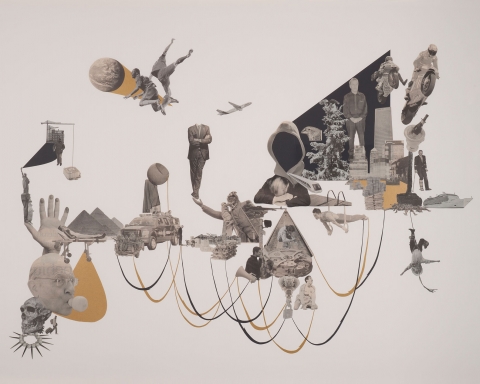
Global Positioning Systems is the second iteration of Pérez Art Museum Miami’s Overview Galleries, in which selections from PAMM’s permanent collection are displayed alongside loans from important private collections. Consisting of six interrelated parts (titled History PaintingVisual Memory,The Uses of HistoryUrban ImaginariesThe Contested Present, and Forms of Commemoration), this thematic group presentation explores the intersection between globalization and history. Since the late 1980s, the political and economic forces unleashed at the close of the Cold War have combined with dramatic advances in transportation and digital communications to create an unprecedented degree of interdependency among the nations of the world. As the networks of individuals, institutions, and markets that constitute the international system of art-making and distribution have expanded to include voices from disparate regions and contexts, the field has become a mirror for the cultural effects of this heightened state of global integration. One of the most important of these cultural effects has been the destabilization of any singular understandings of time and world history. The idea that the past may bear different meanings depending on one’s geographic and cultural standpoint has never seemed more incontrovertible. Global Positioning Systems explores this issue by bringing together the productions of an international and intergenerational array of artists who engage diverse histories while raising questions about how the past is recorded and remembered.


More on the Perez Museum Website at: http://www.pamm.org/exhibitions/global-positioning-systems


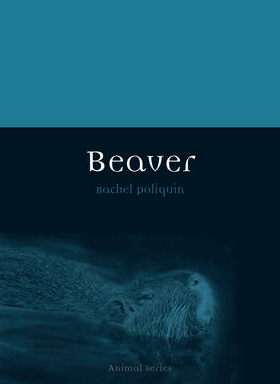
Beaver Rachel Poliquin

With their unique scaly tail, chainsaw teeth, powerful scent and astonishing architectural prowess, beavers are unlike any other creature in the world. Not surprisingly, the beaver has played a fascinating role in human history. Beaver explores the lives and characteristics of these exceptional creatures, from their soft fur to their architecture and their ecological transformations, revealing beavers to be survivors capable of withstanding ice ages, major droughts and predators, except one: humans.

Widely hunted for their fur, beavers were a driving force behind the colonization of North America and remain Canada’s national symbol today. Castoreum, the pungent musk secreted by beavers, was long used in medicine and has been an ingredient in perfumery and food production. From depictions of beavers in the fables of Aesop and Native American mythology to contemporary environmental politics, Rachel Poliquin investigates the facts and fictions of beaver chain gangs, beaver-flavoured ice cream and South America’s ever-growing beaver population.

This beautifully illustrated book, filled with the strange history and improbable tales of the beaver, will delight all readers.

EXHIBITION OVERVIEW

Curated by Victoria Reis, Transformer

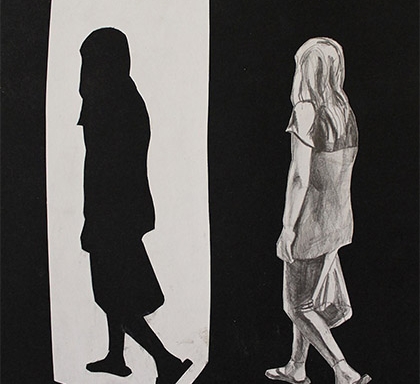
The first in the Do You Know Where Your Art Comes From? four-part exhibition series curated by Victoria Reis, Executive & Artistic Director of Transformer, and presented at American University’s Katzen Art Center in collaboration with AU’s Studio Arts Program Visiting Artists Program, Locally Sourced provides an in-depth look at the extensive collections of six regionally focused CSA (Community Supported Art) and Flat File programs that seek to grow recognition and support for artists in their communities. Featuring more than 300 small works and multiples in a variety of mediums, including drawing, painting, hand silk-screens, digital prints, photography, collage, sculpture, and more, this comprehensive exhibition will span the entire 2nd floor of the Katzen Art Museum. See more athttp://www.transformerdc.org.


“In and Between Geographies” brings together a group of international artists who incorporate into their practice research and thinking on issues that determine the location of the human being (physical, political, cultural) and how are this affects its life–including subjective aspects such as desire and intellectual production. From the concept of landscape, recurrent scrutiny of the natural environment from the arts, to the discussion of pressing issues such as migration, the impact of Internet on lifestyle or the conflicting geo-political division of the world, through the idea of travel, cosmopolitanism and communications, “In and Between Geographies” arises from the museums own vital moment: an assessment of its position in the geography of the arts in Medellin, Colombia, the region and the international artistic world.


“I grew up in the country, in a tiny village surrounded by farmland,” artist Christy Gast says from her loft in New York City’s Chinatown. “I spent a lot of time by myself, wandering around the fields and the woods.” It’s no mystery, then, that landscape has become the central theme in her work. “The landscape in general has always been a friend, and I guess with all friends it’s something you want to look at more intimately as you grow older.”

Gast’s work explores ideas of femininity and “contested landscapes,” places where the historical or contemporary narrative is fraught with issues of ownership, the cultural narrative with physiological issues, all applied to the environment where these ideas intersect. Gast uses these issues as a springboard for her work, telling bigger stories about the world.

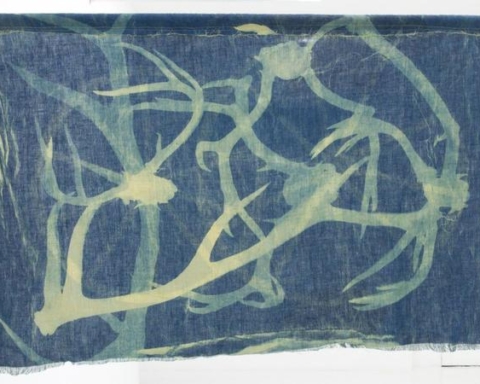
Her work primarily occupies a tactile space. Gast’s latest exhibit, Byways, which will show at Gallery Diet in Miami this December, exists in the physical realm but features a kind of ancient technology: cyanotypes. Each one was created using materials associated with the bodies of water (including swimsuits in an L.A. carwash and sacred datura in the San Joaquin Valley) she encountered on a cross-country road. It’s still analog, and Gast is ambivalent about the influence of modern technology on her work, despite its current ubiquity,  “I’m not sure that I would give precedence to technology and say that I can do things with technology that I couldn’t do with an analog medium necessarily, its not an either or situation.” Her mindset is one that considers tech as not a separate entity from art, but, on the contrary, just another format: “I think that technology actually is a physical format, because the way it is experienced by the viewer is still within a particular time space, so when I do video installations I think of them as a sculpture and even when I shoot videos, I think of them as sculptures.

“I think that artists have always been at the forefront of figuring out how new technology can be used in more creative and innovative ways. That’s what artists do—they sort of think further than others, they have a different perception.”

http://flaunt.com/art/christy-gast/


Beyond the End is an exhibition dedicated to a research and residency program initiated in 2010 in Tierra del Fuego by curator Camila Marambio. Over the years, the Ensayos residencies have given shape to a dialogue between artists, scientists, local inhabitants and Karukinka Natural Park. Based on the premise that only creative collaboration can efface frontiers in the field of biocultural conservation, Ensayos enacts the complex interdependence of humans, non-humans and matter with the urgency of maturing aesthetic sensibility in the face of scientific discoveries. The work in the exhibition attempts to give form to this multidisciplinary, multispecies research-based project.

Camila Marambio

The exhibition presents the research and residency program “Ensayos”, initiated in 2010 in Tierra del Fuego, Chile, for the first time in an artistic context.
Work-week in Paris at Kadist, Musée de la Chasse et de la Nature and Musée d’Histoire Naturelle with: Émilie Hache (philosopher), Geir Tore Holm & Søssa Jørgensen (artists), Fabienne Lasserre (artist), Myriam Lefkowitz (choreographer), Carla Macchiavello (art historian), Camila Marambio (curator), Maria Luisa Murillo (artist), Laura Ogden (anthropologist), Amanda Piña (choreographer), Alfredo Prieto (archeologist), Maria Prieto (urban and biodynamic farmer), Bárbara Saavedra (ecologist), Carolina Saquel (artist), Sofia Ugarte (sociologist) and Christy Gast (artist-in-residence)

More on the Kadist Foundation website at: http://kadist.org/en/programs/all/1784


Christy Gast "Morning Tide (Miami)" 2014 cyanotype on canvas

CHRISTY GAST
“MORNING TIDE (MIAMI)” 2014
CYANOTYPE ON CANVAS

Christy Gast "Morning Tide (Miami)" 2014 cyanotype on canvas

CHRISTY GAST
“MORNING TIDE (MIAMI)” 2014
CYANOTYPE ON CANVAS

Christy Gast (detail) "Morning Tide (Miami)" 2014 cyanotype on canvas

CHRISTY GAST
(DETAIL) “MORNING TIDE (MIAMI)” 2014
CYANOTYPE ON CANVAS


https://miaminighttide.wordpress.com/2014/06/24/146/